
Democracy Dies in Darkness (Especially When the Lights Are Fired)

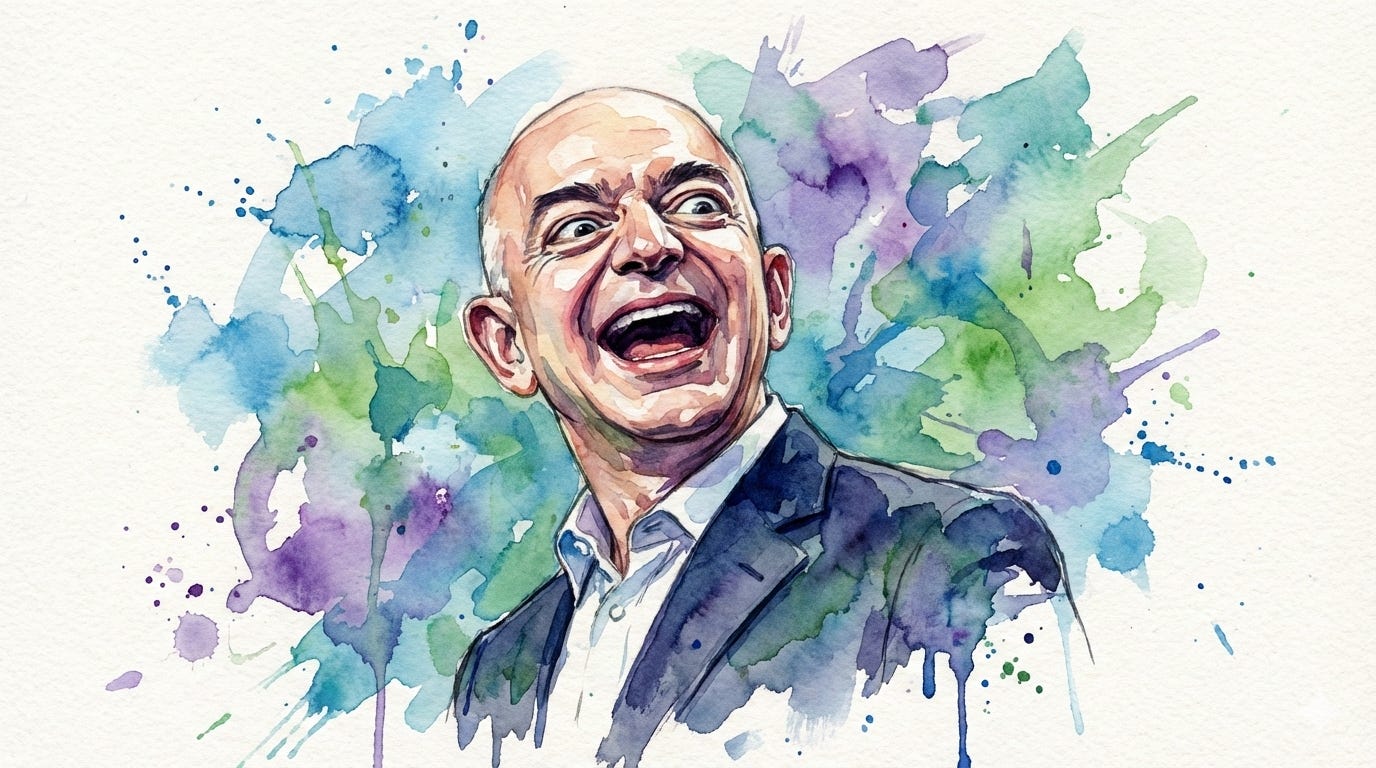
By now, The Washington Post’s slogan — “Democracy Dies in Darkness” — should probably be updated. Something more accurate. Something like:
“Democracy Dies in a Well-Lit Boardroom After a Strategic Review.”
Because darkness isn’t the problem here. The lights are very much on. The PowerPoint slides are glowing. The spreadsheets are immaculate. And the journalists? Fired. Hundreds of them. Neatly. Efficiently. With corporate sympathy emails and a reminder to return their badges.
This is not a tragedy. It’s a business decision. We are told this repeatedly, as if saying it often enough turns it into a moral shield. Journalism, after all, is not a public good — it’s a content vertical. And when a vertical underperforms, you delete it. Preferably before lunch.
The Newspaper That Broke Watergate Meets the Algorithm
Once upon a time, The Washington Post helped bring down a president. Now it struggles to justify keeping a foreign desk.
That arc — from watchdog to cost center — is not accidental. It is the inevitable outcome of placing journalism inside the portfolio of a billionaire whose life experience has taught him one sacred truth: everything must scale, and if it doesn’t scale, it doesn’t deserve to exist.
Jeff Bezos didn’t buy the Post because he suddenly developed a crush on investigative reporting. He bought it the way tech billionaires buy vineyards or space rockets — as a prestige project, a legacy asset, a historically significant object that looks very good next to a net worth measured in hundreds of billions.
But prestige is expensive. Journalists cost money. Accountability journalism costs time. And neither generates the kind of instant feedback loops billionaires adore.
So naturally, the solution is not to question the ownership model. It is to fire journalists.
“Strategic Reset”: The Phrase That Ate Journalism
The layoffs, we are told, are part of a strategic reset. This phrase deserves a Pulitzer for Fiction.
A reset suggests renewal. What this actually looks like is subtraction. Fewer reporters. Fewer editors. Fewer photographers. Fewer beats. Less institutional memory. Less ambition. Less journalism.
Entire sections were gutted. Sports. Books. International coverage. The kinds of reporting that make a newspaper feel like it belongs to a society rather than a metrics dashboard.
But fear not — what remains will be data-driven. Which is corporate shorthand for: “We will chase whatever doesn’t scare advertisers or annoy people with power.”
Billionaires Don’t Need to Interfere — The System Does It for Them
Defenders of the Bezos era love to say there is no direct editorial interference. And that may even be true in the narrowest, most legalistic sense.
Jeff Bezos does not need to call editors and kill stories. He does not need to rewrite headlines. He does not need to issue memos saying “be nicer to billionaires.”
He owns the budget.
When you control:
how many journalists are hired
which desks survive
what kind of reporting is “sustainable”
and which investigations are “too resource-intensive”
you don’t need censorship. You create conditions. And journalists, being human beings with rent to pay, adapt.
This is influence without fingerprints. Power without shouting. Editorial control achieved through accounting.
When Journalism Becomes a Side Quest
The uncomfortable truth is that The Washington Post is not Jeff Bezos’ main concern. It is not even in his top ten.
Amazon’s cloud services power governments. Its logistics network reshapes labor. Its data infrastructure touches surveillance, defense, and intelligence. Bezos himself can afford yachts that cost more than entire newsrooms.
Against that backdrop, journalism is a hobby. A nice one. A prestigious one. But still optional.
So when the Post loses money, the response is not “How do we strengthen our public mission?” It is “How do we make this less annoying?”
And the easiest way to make journalism less annoying is to reduce the number of journalists.
The Cruel Joke of “Efficiency”
Efficiency is the god of modern media. It demands constant sacrifice.
Long investigations? Inefficient.
Foreign bureaus? Inefficient.
Reporters who spend months on a single story? Inefficient.
But outrage cycles, opinion churn, and rapid-fire content? Efficient. Scalable. Monetizable.
The result is a newspaper that still looks impressive from the outside but feels hollow inside — like a museum where the artifacts have been replaced with interactive screens explaining what artifacts used to be.
What Gets Lost Is the Point
When journalists are fired, what disappears isn’t just labor. It’s skepticism. It’s memory. It’s the quiet confidence to ask uncomfortable questions because you know your institution has your back.
Layoffs don’t just shrink coverage. They discipline those who remain.
They teach a lesson: don’t be expensive, don’t be slow, don’t be difficult.
That lesson is absorbed without anyone needing to say it out loud.
The Final Irony
The Washington Post still prints its slogan proudly. It still invokes its legacy. It still trades on the moral authority built by journalists who worked in an era when newspapers were not owned by men richer than most governments.
But today, democracy doesn’t die in darkness.
It dies in:
optimization meetings
quarterly losses
“strategic realignments”
and the quiet assumption that journalism must justify itself to capital, not the public
The lights are on. The room is clean. The staff is smaller. The billionaire is untouched.
And somewhere between the farewell emails and the LinkedIn updates, a newspaper that once held power accountable learned how to live comfortably alongside it.
Like The Article? Click Here
Even without patronizing amazon, it's disgusting to know that Bozos has influence over most people without knowing how.